Originally published on WeChat, April 2025, pointing to the FemTech Weekend × UN Women CSW69 feature. Republished here with light editing.
Read the Original Article#
For more details about the FemTech Weekend event and my participation, you can read the original WeChat article here: FemTech Weekend x UN Women CSW69 Feature
My AI Health Solution for Working Women Featured at the UN and Columbia University#
From Local Hackathon to Global Stage#
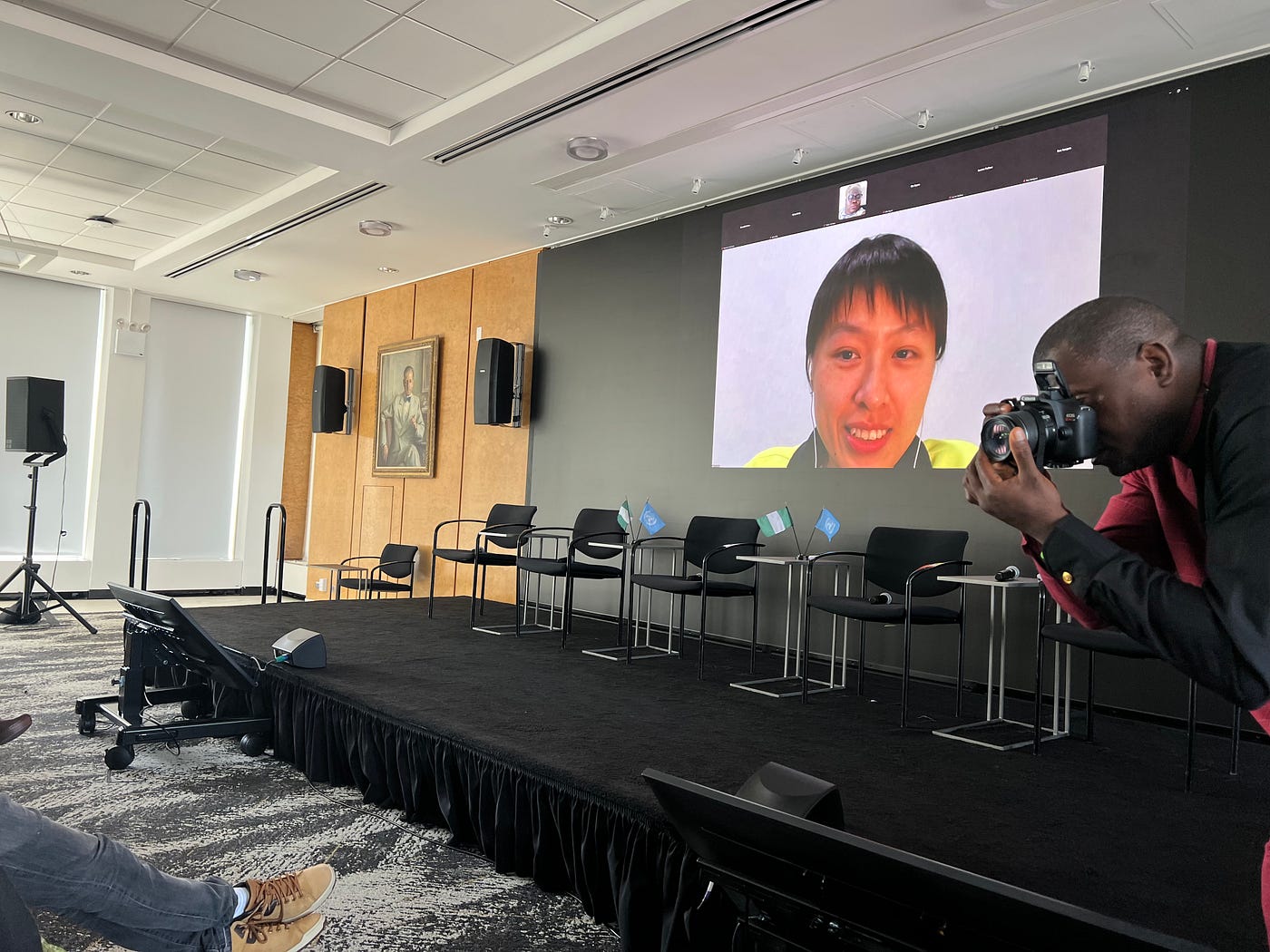
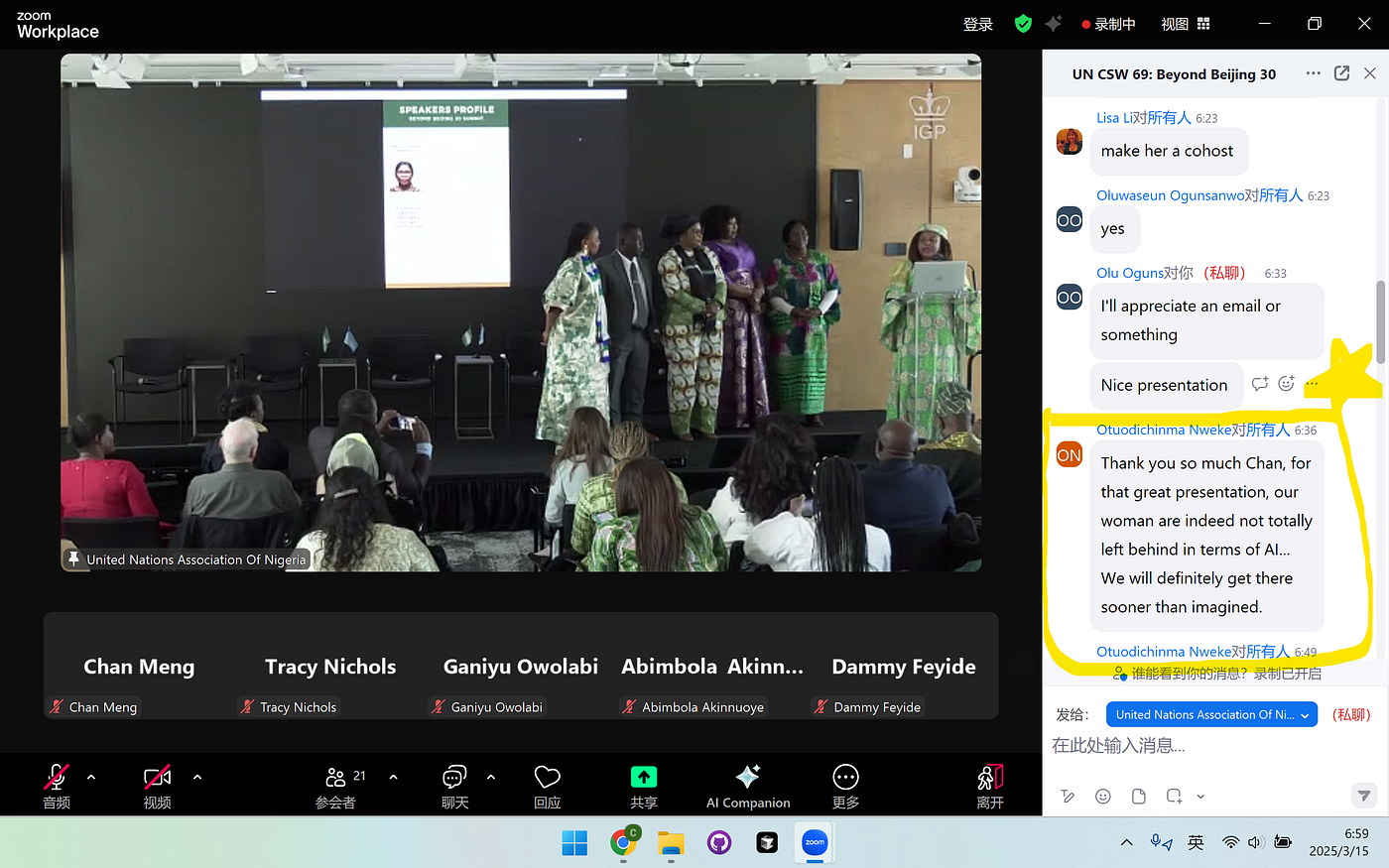
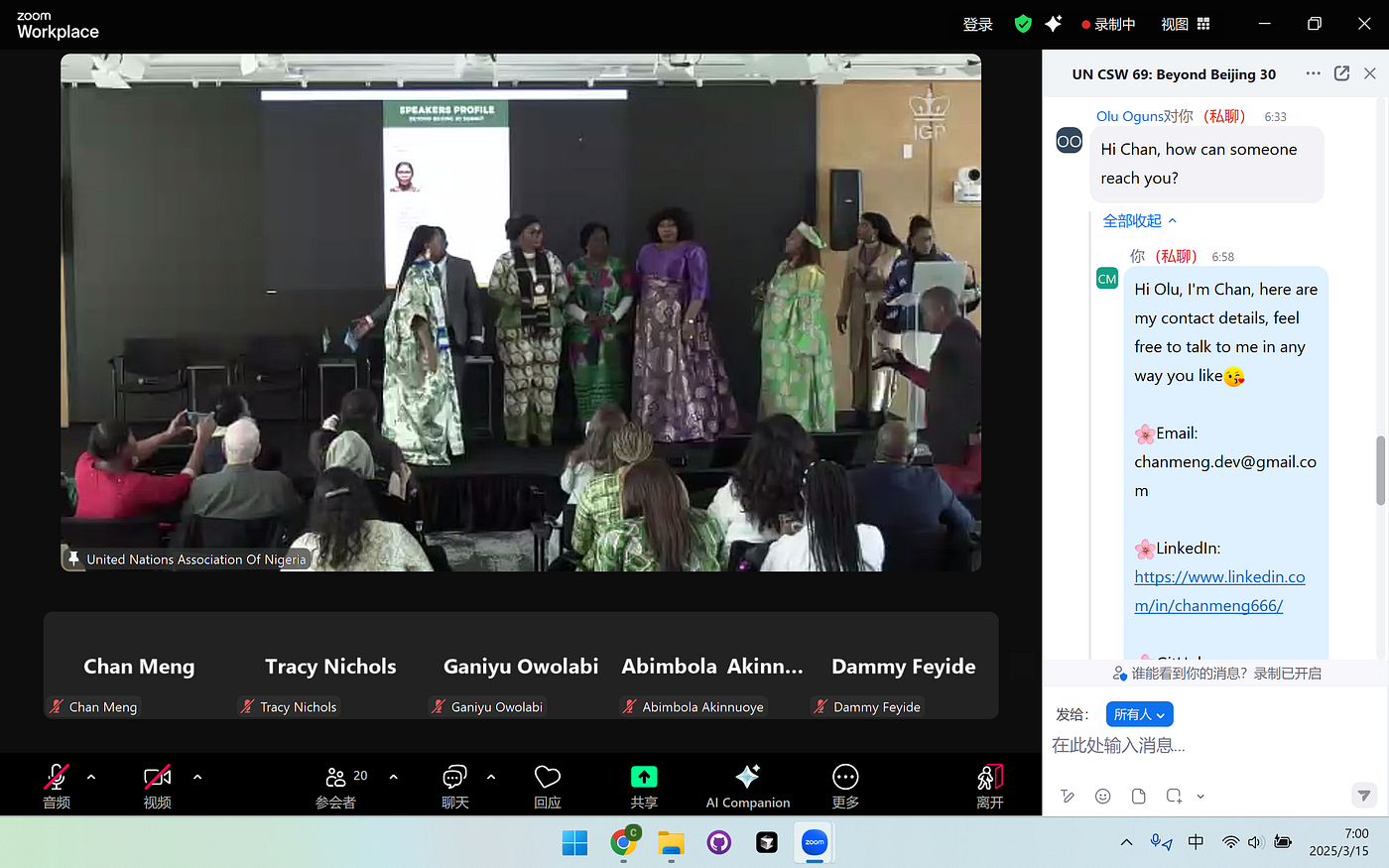
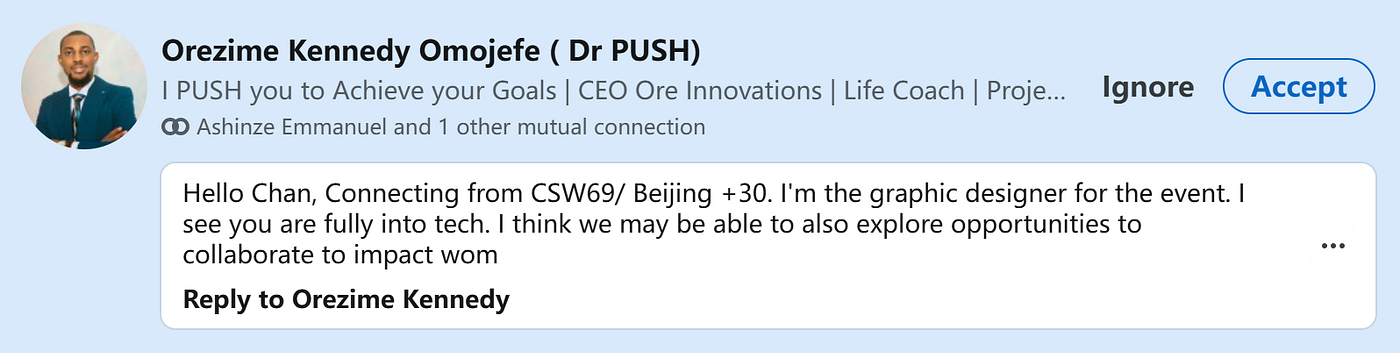
Recently, my AI solution for women’s workplace health was presented at both the UN Commission on the Status of Women (CSW69) and Columbia University SIPA. This recognition came through the FemTech Weekend hackathon, held during the 30th anniversary of the UN’s Beijing Declaration.
The Challenge: Transforming Women’s Health in the Workplace#
The hackathon posed a specific challenge: How can companies make women’s health a management priority?
As a minimalist architect and full-stack developer, I created “Sani” — an AI health assistant with three key features:
- AI-Powered Health Recommendations: Personalized advice for female employees based on their health data
- Privacy-First Design: Analysis without accessing raw personal data
- Dual Dashboard System:
- For employees: Health trend visualization with data permission controls
- For HR: Anonymous health metrics generating women’s health KPIs
Impact and Recognition#
The response was immediate and enthusiastic:
- An IBM representative proposed pilot collaboration, stating: “This system is more precise than our million-dollar DEI training programs”
- Sierra Leone’s Minister of Gender and Children’s Affairs praised it as “the first platform implementing the full process from menstrual data to actionable workplace policies”
Why This Matters#
FemTech (female health technology) currently receives only 3% of global healthcare investment despite its growing market potential — projected to reach $97.3 billion by 2030.
My solution helps bridge this gap by quantifying the business value of supporting women’s health, transforming it from a charitable concern into a strategic investment with measurable returns.
Moving Forward#
This experience reinforces my development philosophy: complexity should remain behind the scenes while users experience only the effortless result.
Technology isn’t automatically equitable, but when we incorporate women’s needs into code and workplace policies, equality becomes achievable.
Chan Meng is a minimalist architect and full-stack developer specializing in women’s health technology solutions. Connect with me to discuss innovations at the intersection of health, technology, and workplace policy.