Teaching & giving back
Everything I learn how to build, I publish for free. No paywall, no signup, nothing held back for a paid tier — and every lesson written twice, once in English and once in Chinese.
One · why it's free
The barrier was never talent
I learned to build by reading things other people published for nothing. That is the entire reason I can do this work, and it is not a debt I can repay to the specific people who wrote them — only forward, to whoever needs it next.
AI has made the gap between “I have an idea” and “other people are using my thing” smaller than it has ever been. What is still missing is somebody willing to sit with a beginner through the parts that feel humiliating: the terminal that rejects you, the error that means nothing, the moment you are sure you are too late and too stupid. That part does not scale, so I do it in person, in cohorts.
The written curriculum does scale — so that part is free, permanent, and in two languages. Nobody should need my permission, my invoice, or my time zone to learn this.
Two · five cohorts, none taken down
Everything stays online
Courses usually vanish when the term ends. These do not. All five cohorts since 2024 sit side by side on the same site, versioned, so a student from the first winter can still open exactly what they were taught.
TECHNEST 2026
2026 · running14 lesson pages · 14 Chinese mirrors
A 12-week, prompt-first AI track. Students arrive knowing only how to chat with an AI; by week 8 they have shipped a multi-user app that other people log into.
HER WAKA 2026
2026 · running80 lesson pages · 80 Chinese mirrors
The largest curriculum on the platform — a workshop series built for women stepping into technology, with tutorials that assume no prior programming.
Peyvand Academy 2026
2026 · running15 lesson pages · 15 Chinese mirrors
A hands-on workshop track, including an IoT-toys build that gets physical hardware talking to AI-generated code.
Forward with Her — Summer 2025
2025 · archived, still online12 lesson pages · 12 Chinese mirrors
The second Forward with Her cohort. Kept published so past students never lose the material they learned from.
Forward with Her — Winter 2024
2024 · archived, still online32 lesson pages · 32 Chinese mirrors
Where this started: basics, practice projects, and advanced tutorials for people who had never written a line of code.
Three · both languages, always
153 lessons, written twice
Bilingual usually means the English is real and the other language is a stub. Here the counts match exactly, cohort by cohort — 153 English lesson pages and 153 hand-written Chinese ones. Not machine-translated at request time; committed to the repository, where anyone can check the number.
Four · what students actually shipped
Working apps, not certificates of attendance
The 2026 TECHNEST track ended with a public Demo Day. Thirty students graduated and six deployed multi-user AI products went live — real URLs, real sign-ups, other people's data. Six credentials were issued and each one has a permanent public page, because students link them from their profiles and a dead link is worse than no credential.
Five · I built the school too
Including the tutor that answers at 2am
A cohort has one instructor and one time zone, and beginners get stuck at night. So the site has its own AI tutor, and it answers only from the lessons of the class you are actually in — retrieval over each cohort's own material rather than a general chatbot that confidently invents a step you were never taught.
It runs on Cloudflare Workers with Vectorize and KV, so it costs almost nothing to keep online — which is the point. A free course that needs funding to stay up is not free, it is deferred.
The whole platform is Apache-2.0 licensed and public. If you want to run your own cohort with it, take it.
Six · not just my own account of it
Outstanding Mentor Award, two years running
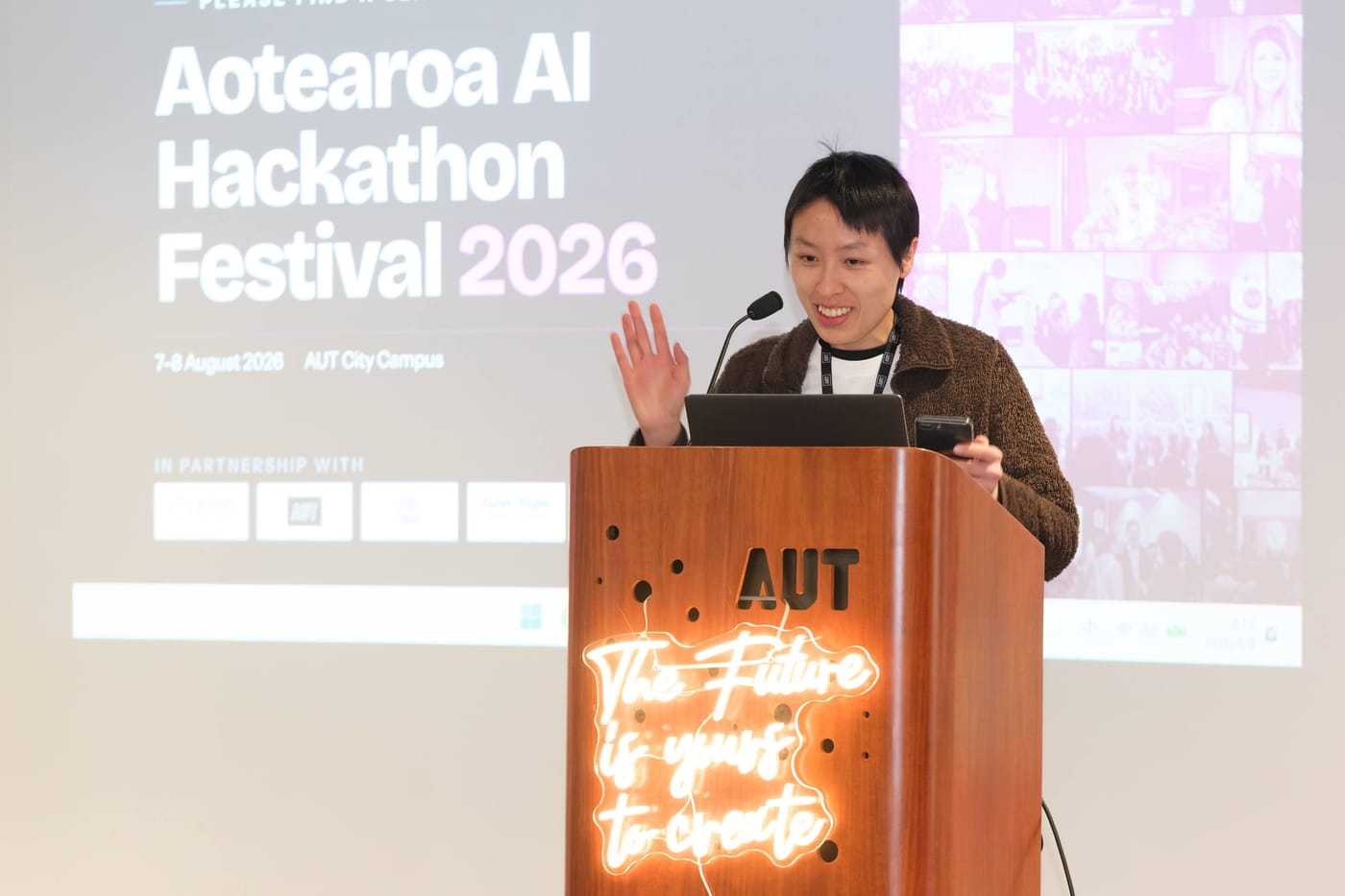
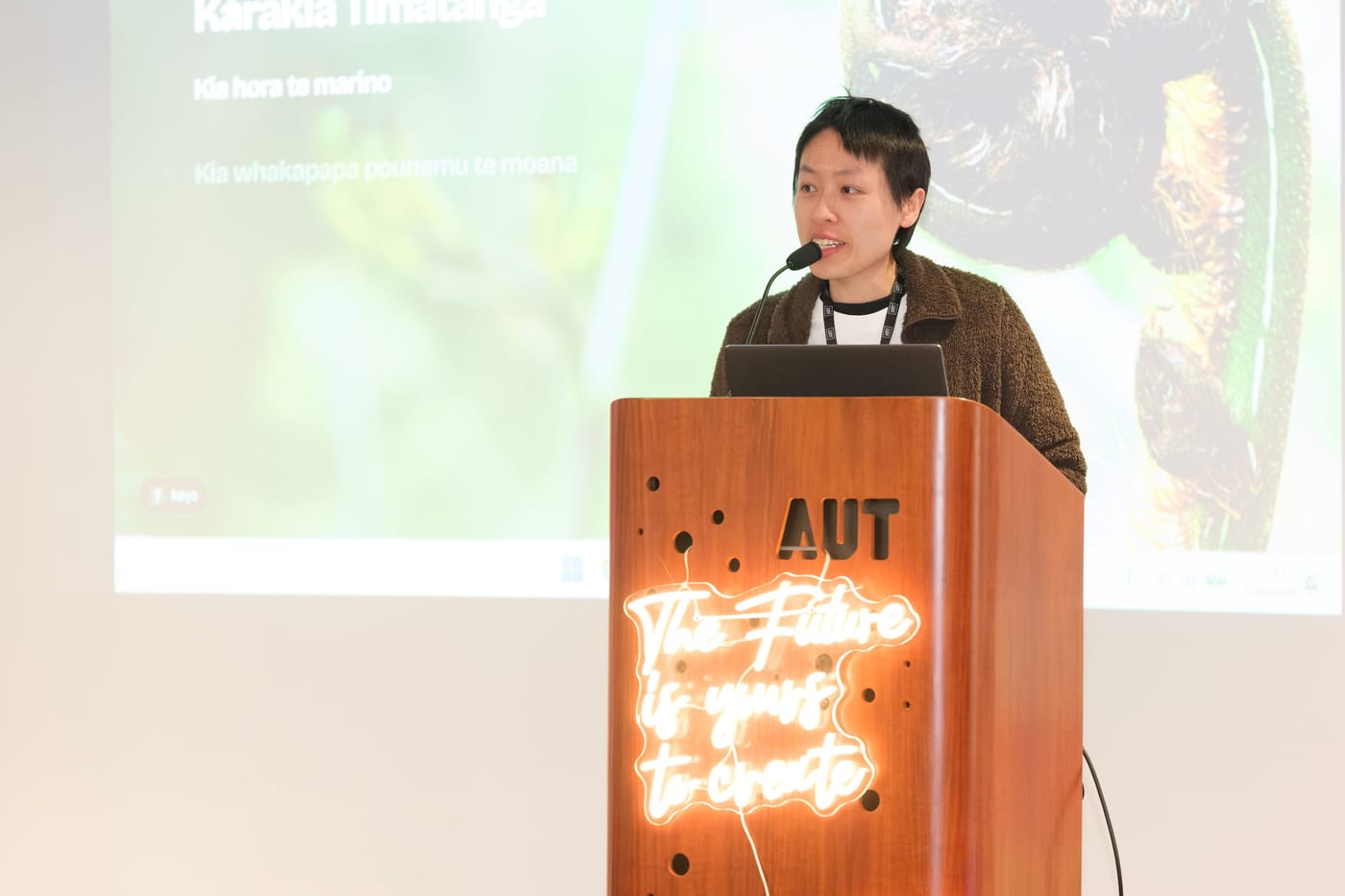
AI Hackathon Festival 2025 — one of 14 expert mentors, guiding 11 teams and more than 80 participants — and again at the Aotearoa AI Hackathon Festival 2026, with 125 registered participants across twelve teams, where I also MC'd the opening. Alongside it, a good share of the recommendations on my LinkedIn are from former students rather than colleagues, which is the review I care about most.

Start
anywhere
It is all open. Pick the cohort that sounds like you, or just read the outline and see whether this is the way you like to learn.